Roland Announces JUPITER-4 Software Synthesizer


Roland announced the JUPITER-4 Software Synthesizer, the latest addition to the Legendary instrument series available through Roland Cloud. Released in 1978, the JUPITER-4 was Roland’s first polyphonic synthesizer and the first to carry the the JUPITER name. With the JUPITER-4 Software Synthesizer, the authentic sound of this trendsetting icon is now available as a computer-based plug-in and a PLUG-OUT for the SYSTEM-8 synthesizer keyboard.

Roland products with the JUPITER name represent the current pinnacle of the company’s synthesizer development, a benchmark started over four decades ago with the JUPITER-4. In addition to incredible analog synthesis power, it brought then-revolutionary digital voltage control and the ability to store eight presets with technological wizardry dubbed “Compuphonic.” But the JUPITER-4’s real appeal was its warm, fat voice and inviting hands-on panel, which inspired synth pioneers to create the defining sounds of synth-pop, new wave, and other emerging styles of the late 70s and early 80s.

Roland’s evolving Analog Circuit Behavior (ACB) technology brings the JUPITER-4 to life through careful analysis of original hardware units, circuit diagrams, and other historical data. This information is then used to recreate the authentic circuit behaviors of the vintage instrument – including all the beloved quirks and instabilities – giving the JUPITER-4 Software Synthesizer a breathtakingly accurate sound that buzzes with unique character.

While the JUPITER-4 only has a single VCO, it sounds positively massive, thanks to the combined characteristics of its oscillator, filter, LFO section, and more. ACB brings all these elements together like the original hardware, capturing the behavior and component interactions to create sonic magic. Going further, powerful Circuit Mod and Condition controls allow users to adjust the overall character to suit their taste.

The JUPITER-4 also includes enhanced features for modern workflows, including extended oscillator range, adjustable noise, velocity sensitivity, sub-oscillator volume control., and a flexible arpeggiator. In addition, phaser, flanger, overdrive, reverb, and delay effects are available to complement the lush Ensemble chorus effect from the original keyboard.

The plug-in flows easily into modern DAW environments with a resizable UI, support for VST3, AAX, and AU formats, and native compatibility with Apple silicon. It also offers full integration with the Roland SYSTEM-8 Synthesizer. Users can control the software plug-in from the keyboard’s panel and PLUG-OUT functionality turns the SYSTEM-8 into a standalone, eight-voice JUPITER-4 for stage and studio playing.

The JUPITER-4 Software Synthesizer is the newest member of Roland Cloud’s Legendary series, which includes plug-in versions of the JD-800, JUNO-60, JUPITER-8, TR-808, TR-909, and other Roland classics. Users can select two Legendary titles with the Pro membership level, or get full access to all the titles with Ultimate membership. All paid levels – including Core and Pro – start with a free 30-day trial of Ultimate, allowing users to try out the JUPITER-4 and Ultimate features.

In addition, any Roland Account holder can purchase Lifetime Keys for individual Legendary series titles. This provides unlimited access for as long as their account is active, even if they don’t have a Roland Cloud membership.

The JUPITER-4 is part of the Analog Polysynth Collection, a new Legendary series bundle that also includes the JUPITER-8, JUNO-60, JUNO-106, and JX-3P software plug-ins. The bundle provides Lifetime Keys for all included products and offers a saving of nearly 40 percent over purchasing individual titles.


Xiaomi and Leica Camera Present Jointly Developed Products


The Xiaomi 12S Series “co-engineered with Leica” was officially launched in China. In particular, the camera of the flagship model, the Xiaomi 12S Ultra, sets a new standard in the area of smartphone photography.

In May of this year, Xiaomi, one of the world’s leading smartphone companies, and Leica Camera AG publicly announced their strategic partnership in the mobile imaging segment. Now, the first products jointly developed by the two companies, the Xiaomi 12S series ‘co-engineered with Leica’, have been presented to the Chinese Market.

For more than 100 years, Leica has stood for photographic excellence, best picture quality and the fine art of German precision engineering. “For almost a decade now, we have been successfully incorporating our know-how into camera systems in the smartphone segment, thereby repeatedly demonstrating our expertise and activities in future-oriented technology fields such as image processing, image quality tuning and computational imaging.

Leica and Xiaomi have come together to present the beginning of a new era in smartphone photography. In particular the jointly developed flagship model, Xiaomi 12S Ultra, illustrates the innovative power of both companies, and will delight our customers with a camera module that offers them exceptional imaging quality, the classic Leica image look and unlimited creative freedom”, explains Matthias Harsch, CEO of Leica Camera AG.

Within the framework of the collaboration with Xiaomi, Leica contributed its expertise in the development and realization of the camera module for the Xiaomi 12S series smartphones. Here, particular attention must be called to the flagship model, the Xiaomi 12S Ultra. A special highlight of the flagship model, and entirely new to the smartphone segment, is the choice of two different image profiles in the camera model.

Consumers can select the options “Leica Authentic Look” and “Leica Vibrant Look”. Developed especially by Leica, the “Authentic Look” profile will delight Leica fans in particular and fascinate all other customer with smartphone images with the iconic “Leica Image Look.”

In the creation of the “Authentic Look” profile, Leica imaging experts attached particular importance to an aesthetically pleasing and natural-looking rendition of colors, good definition in shadows, realistic local contrasts and the excellent reproduction of finest details. In addition to this, the “Authentic Look” profile features a reduced compensation of vignetting to ensure minimal darkening between the center and the corners of the image and lend it to the typical look and character of a photograph captured with a Leica Summicron lens.

The “Leica Vibrant Look” profile was jointly developed by Xiaomi and Leica. Through the combination of Xiaomi’s experience in the field of smartphone photography and the visual aesthetics typical for Leica images, photographers can use this style to perfectly capture the emotions of a moment in vibrant yet realistic color.

Featuring a 50-megapixel Sony IMX989 1-inch image sensor and a Vario-Summicron 13-120mm f/1.9-4.1 ASPH lens with a zoom range of 13mm to 120 mm, the Xiaomi 12S Ultra delivers brilliant pictures in JPG, DNG, and HEIF format that impress with highest quality and true-to-life detail, especially in large-format prints. To enable consumer-friendly post processing, the Xiaomi 12S Ultra, the Xiaomi 12S Pro and the Xiaomi 12S all support the Adobe Labs-calibrated 10-bit RAW format.

All of the products of the Xiaomi 12S series ‘co-engineered with Leica’ are available exclusively in China.


Walrus Audio Announces Lore Revenge Soundscape Generator


Walrus Audio announced the Lore Reverse Soundscape Generator. It is priced at $299.

Once upon a time, in a fairy world, there stood a hidden forest. On the eve of every full moon, magical and delicate sounds of light were heard bouncing and reverberating through the trees. These sounds carry artifacts of notes moving backward and stretching through time, They are referred to as… Lore.

Create the soundtrack to your storybook adventure with the Lore Reverse Soundscape Generator. Made up of five different programs, the Lore is an ambient creation machine built around reverse delay and reverbs. Featuring two DSP chips running in series, each with their own analog feedback path, the Lore takes you on an adventurous journey rich with themes of reversing, time-stretching, pitch-shifting, and vast ambiance.

Analog Feedback Paths: Having two analog feedback paths allows each program to incorporate a unique mix of affected and unaffected feedback. The two feedback paths interact and build off of each other organically, offering the user a wide array of sounds and behaviors to experiment with.

Programs:

Reverse Delay into Reverse Reverb: Program 1 combines reverse delay with reverse reverb with a focus on organically interacting feedback paths. Space and ambiance build as the signal is reversed, re-reversed, reverberated, and reversed again within the feedback network. Experiment with the X knot control how reversed your delay trails are with left being least reversed and right being reversed. Lots of fun with big, eerie minor chords!

Reverse Delay into Octave Up Reverb: Program 2 is a “light reverb” that combines octave-up harmonic feedback with an expansive, airy, reverb tank to create a breathy, spacious ambiance. Use the Regen knob to introduce a playful shimmering the reverb decay. Increase the X knob to control the decay of the reverb. It sounds especially great with delicate fingerpicking parts.

Reverse Delay into Octave Down Reverb: Program 3 is a “dark reverb” that combines octave down harmonic feedback with heavy filtering and harmonic distortion, to create a sound that is thick, rich, and murky. Use the Regen knob to bring a lower octave into the reverb decay. Increase the X knob to control the decay of the reverb. Add in some high gain or fuzz to alter the time-space continuum.

Reverse Reverb into Forward Reverb: Program 4 is a dual reverb program, featuring reverse reverb into forward reverb, Dual harmonic feedback paths allow the use to dial in octave up and octave down, and time stretching allows for control of the size and character of the space. Perfect for instantly transforming guitar into rich ambient pads. Use the Feedback knob to add a lower octave to the reverse reverb. Conversely use the Regen knob to add an octave to the reverse reverb decay. Control the decay of the forward reverb with the X knob. To channel all things ambient, experiment with dynamic picking and strumming techniques with the mix fully wet for ethereal drones and pads.

Pitch Delay into Pitch Delay: Program 5 features two “dueling” pitch delays, which shift the input signal up and down in complementary or opposing directions, allowing the user to create intricate harmonic patterns in the feedback network. Behaves like a sequencer at higher delay times and like a harmonizer at lower delay times. Use Feedback and Regen knobs to control various amounts of pitched delay repeats. Use the X knob to change the order of the 4th, 5th, and octave intervals that the pitch delay steps through. Experiment with short staccato notes to create some very interesting rhythmic parts!

Find out more about the Lore Reverse Soundscape Generator at Walrus Audio!


DJI Introduces RS 3 and RS 3 Pro Gimbals


DJI has upped its gimbal game with the introduction of the RS 3 and RS 3 Pro models, along with the long-distance O3 Pro Video Transmission system. Both gimbals feature automated axis locks that unlock in lightning-fast time, letting you jump right into the action so you don’t miss that crucial shot.

An updated stabilization algorithm, SuperSmooth mode, and new quick-release plate designs make your gimbal capture easier and more impressive than ever before. The RS 3 and RS 3 Pro also share exciting new features, such as wireless shutter control, and an all-new focus motor in addition to some model-specific upgrades.

Shared RS 3/RS Pro Features

Automated Axis Locks: Getting the shot you want is always important, but its critical when you’re covering a live event where second takes are impossible. The RS 3/RS 3 Pro’s automated axis locks expand for use in just two seconds at the press of a single button. This means that once you’ve done your initial camera setup, you’re just seconds away from capturing the action. When its time to move to your next location, it’s an equally speedy breakdown.

Wireless Shutter Control: The new RS 3 and RS 3 Pro use Dual Mode Bluetooth to support wireless shutter control to trigger on-stabilizer recording. Once you’ve paired your camera for the first time, it will automatically reconnect, eliminating the need for a trigger cable, saving time and effort.

3rd Gen RS Stabilization Algorithm: Stable, jitter-free movement is key to keeping your audience engaged in your story and the new algorithm increases stability by 20% compared to the RSC 2. Tracking shots, low-angle views, and switching between high and low positions will all benefit from the improved stabilization.

SuperSmooth Mode: When you’re covering fast-moving, dynamic action, or when using 100mm-equivalent lenses, turn to the new SuperSmooth mode for enhanced stability.

Focus Motor: The next-gen DJI RS Focus Motor has been beefed up with three times the torque of the earlier model for smoother focus moves while reducing motor noise by 50% for improved audio capture. A new quick-release design lets you assemble the focus motor without any tools.

Instant Mode Switching: A new Mode switch lets you quickly alternate between Pan, Pan Follow, Tilt Follow, and FPV modes with a choice of 3D Roll 360, Portrait, or Custom for the FPV mode.

RS 3 Gimbal

Lightweight and streamlined, the DJI RS 3 Gimbal Stabilizer provides pro stabilization and creative control for independent creators and smaller video productions alike. The RS 3 Combo includes the gimbal plus the RS Focus Motor system, the folding Briefcase Handle, a carrying case, and a second USB-Type C control cable.

The RS 3’s new tilt axis fine-tuning enables precise balancing for different lenses and a dual quick-release plate system lets you remount your camera after a battery or card swap quickly – without the need to rebalance. Weighing just under 3 lb (including battery grip and quick-release plates), the RS 3 is light enough for single-handed use but can also support many popular cameras like the Sony a7 S III or Canon R5 with a 24-70mm f/2.8 lens.

RS 3 Pro Gimbal

The DJI RS 3 Pro Gimbal Stabilizer incorporates Ronin-series features, providing advanced operating modes for pro videographers and camera crews. Choose the RS 3 Pro Combo to add the Ronin Image Transmitter, extended lower quick-release plate, phone holder, focus motor system, and assorted cables to the gimbal itself.

To accommodate cameras like the Sony FX6 or Canon C70 more efficiently, the RS 3 Pro has an extended carbon fiber axis arm that provides additional balancing, a tilt axis fine-tuning knob, and an extended lower quick-release plate for mounting a lens support and for increased stability. The RS 3 Pro weighs just 3.3 lbs (including battery grip and quick release plates), yet supports up to 10 lb.


Keeley Electronics Introduces Halo Pedal


Keeley Electronics introduced Halo – Andy Timmons Dual Echo – Signature Pedal. It includes Andy Timmons signature HALO sound, 5 delay rhythms, 8 factory presets, 0 to 1500ms of delay time for ambient creations, Tap Tempo, and Infinite Hold. Right now, Keeley Electronics has 6 in stock.

The Andy Timmons’ mysterious sounding “Halo” effect is a modulated dual echo sound that has long been kept a secret by the tone wizard himself. Andy spend decades comparing and crafting the sounds you can now get from the HALO. Notes from the HALO dance rhythmically, almost creating a reverb diffusion. Those notes are held together with tape-style effects like modulation, saturation and compression. The results are stunning.

The pedal comes loaded with his signature delay tone and you can program your own sounds and save them as presets. Easily bounce between Side A and B on the fly, essentially giving you two delay pedals in one. In addition to Andy’s signature “Halo” sound, there are numerous other rhythmic delays including: quarter note, dotted 8th, stereo rack mount analog delay, and a vintage multi-head tape echo. Stunning stereo and pristine sound quality are further enhanced with controls for saturation, tone, and shelving filters that give you the ultimate delay pedal.

The Sound of Two Delays

Use the HALO as two delay pedals that work in tandem, letting you switch between your main delay (side A) and an alternative (side B). With up to 1500 ms of available delay, set sides A and B for different delay times, then simply foot switch between the two. Keeley Electronics’ Smart Stomp System allows you to press and hold either stomp switch to engage tap tempo mode. Press and hold the alternative stop switch for infinite repeat/hold. Each Preset bank gives you 2 delay settings for a total of 8 user-storable effects!

HALO Dual Echo Features:

  • Andy Timmons signature “Halo” sound saved as a preset!
  • The HALO functions as 2 delay pedals with up to 1500ms of available delay time – save different sounds to A and B – then switch between the two!
  • 5 delay rhythms including stereo rack BBD and multi-head tape delay.
  • 8 factory presets loaded with new delay and modulation sounds.
  • Status light indicates when you’ve adjusted a knob from home settings.
  • Soft stomp switches for tap tempo, infinite hold, preset save/recall, and more.
  • Remove switching and programmable expression pedal control.
  • DREAM multi-core DSP for stunning sound quality.
  • True-Bypass or Trails.
  • Made in the USA.

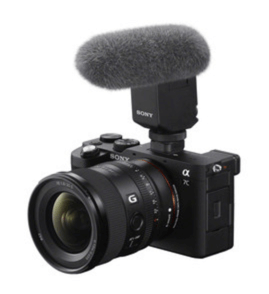
Sony Electronics Announces New Compact ECM-B10 Shotgun Microphone


Sony Electronics Inc. introduced a new shotgun microphone, the ECM-B10. This new microphone features Sony’s industry-leading directivity and digital signal processing, known to the ECM-B1M, in a remarkably compact form factor.

A Three-in-one Microphone

The ECM-B10 applies digital signal processing to the sound collected by four high-performance microphone capsules using beamforming technology. This allows the user to customize how the audio is recorded by enhancing the microphone’s sensitivity from different directions. The microphone offers three types of directivity in a single product, allowing the user to easily switch between super-directional, unidirectional and omnidirectional.

When using super-directivity, the microphone collects sound from a narrow field in front while suppressing sound from other directions. The super-directivity setting is a great option for interviews, selfies, and other situations where the range of sound collection is limited to a narrow extent at the front.

The ECM-B10 also offers unidirectional sensitivity that suppresses sound from behind while collecting sound from a wide field in front. This option is perfect for recording conversations between several people.

For additional flexibility, the user can also select omnidirectional sensitivity, which picks up sound equally from all directions and is ideal for recording environmental sounds.

Crystal Clear Recording

The ECM-B10 offers crystal clear sound collection with effective noise suppression. Using digital signal processing within the microphone itself, the ECM-B10 effectively reduces noise for clearer sound collection and creates a more efficient post-production workflow since less audio edits are required.

The ECM-B10 pairs with cameras that are equipped with a MI (Multi Interface) Shoe, either analog or for best results; with cameras with a digital audio interface to transmit audio directly as a digital signal to deliver high-quality sound recording without degradation. In addition, the microphone’s shock and vibration suppressing design effectively suppresses low-frequency vibration noise, while its cable-less design eliminates noise transmitted via cables. The supplied windscreen minimizes environmental noises, making it easy to capture crisp audio even when shooting outside.

For additional versatility, the ECM-B10 also includes the following audio setting:

ATT (attenuator) switch (0/10/20 dB)
FILTER switch (noise cut / low cut / off)
AUDIO LEVEL dial with AUTO/MAN (manual) switch
DIGITAL/ANALOG switch

Features to Love

The microphone’s compact body provides flexibility and mobility, even when using gimbals and grips.

Users can also experience greater shooting flexibility by connecting the ECM-B10 to a camera via the MI Shoe to operate without cables, which prevents any interference with the side flip out screen, or external batteries. Power is supplied directly from the camera to the microphone, so you can continue shooting without worrying about the microphone battery running out.

For detailed setting operation, a comprehensive range of audio settings are available on the back of the microphone. This lets the user check the setting status at a glance to prevent accidental settings and give peace of mind. For added durability, the ECM-B10’s design is resistant to dust and moisture, which allows for worry-free outdoor shooting when combined with a similarly dust and moisture resistant body and lens.

Pricing and Availability

The new ECM-B10 will be available in August for approximately $250.00 USD and $320.00 CAD. It will be sold at a variety of Sony authorized dealers throughout North America.


Roland Announces E-X50 Arranger Keyboard


Roland announces the E-X50 Arranger Keyboard, a powerful new entertainment instrument for home or stage use. Offering a diverse range of high-quality sounds – including premium Roland pianos – plus automatic accompaniment features, a microphone input, onboard Bluetooth audio, and more, the E-X50 is ideal for everyone from beginners to hobbyists to professionals looking for an all-in-one performance keyboard.

The E-X50’s stylish, modern, design flows nicely into contemporary living spaces, while the full-range stereo speaker system fills the room with big, enveloping sound. With the intuitive display and smartly organized panel, users can freely navigate the E-X50’s many features with zero frustration.

The E-X50 comes equipped with premium Roland acoustic pianos favored by the world’s top musicians, providing authentic tone and expressive response that follows every playing nuance. Nearly 700 additional sounds are also available for exploring other styles, from electric pianos, organs, and guitars to orchestral instruments, synthesizers, and more. And like all Roland arrangers, the E-X50 offers a vast selection of high-quality regional sounds from all over the world.

With the E-X50’s sophisticated auto-accompaniment features, players can command a full band sound with their left hand as they play along with the right. The 300 preset styles include everything from rock, pop and jazz to ballads, dance music, and traditional styles from different countries. Beginners will love Auto Bass Chord mode, which allows them to drive arrangements with one or two fingers. Whole mode is well-suited for advanced keyboardists, providing the ability to control the accompaniment even more deeply with full left-hand chords.

It’s easy to further extend musical enjoyment with the E-X50 by connecting a phone or tablet via Bluetooth audio. Users can stream and play along with songs through the onboard speakers or learn new techniques by working through the wealth of instructional videos on the web.

The E-X50 also supports vocal performances with the rear-panel microphone input, complete with ambience effects for a professional sound. And for more sound coverage while entertaining larger crowds, stereo outputs are available for connecting to an external audio system. There’s also a USB port for interfacing with favorite music software, plus a USB memory port for backing up sound setups and E-X50 recordings to a USB flash drive.

For advanced players who need even more control over their arrangements, Style Converter software for macOS and Windows offers the ability to load up to 30 custom styles into the E-X50’s memory. It’s also possible to adjust scales, tuning, and other parameters to personalize the keyboard for different performance needs.


Fender Reveals Sampling Of New Product Lineup For Fall


Fender Musical Instruments Corporation (FMIC) revealed a sampling of its new Fall 2022 product lineups, encompassing both player-driven guitar innovation and longstanding Fender craftsmanship. Designed to support Fender’s mission to give ‘artists wings to fly’, the new offerings cater to players looking to expand their sonic palette whether picking up for the first time, stage-ready performers or collectors adding a new piece to their arsenal.

Music continues to evolve as artists expand and diversify the space, redefining the role guitar plays in their creative process. Fender has long listened to this increasing demand for innovation from players and is continuously introducing new models to help fuel creative expression and a hunger for new sounds. New launches span compact yet bold amplifiers and most notably, All-Mahogany additions to the American Acoustasonic Series embodying the spirit of purposeful innovation that Fender was built on.

2022 New Product – Acoustics.- American Acoustasonic All-Mahogany

American Acoustasonic All-Mahogany Guitars embody the spirit of purposeful innovation that Fender was built on. From acoustic shape-shifting to electric rhythm tones, these powerful guitars use a revolutionary Fender and Fishman-designed Acoustic Engine to deliver new sonic expressions from the studio to stage hand. Handcrafted in Corona, California at the same factory that makes Fender’s iconic electric instruments, these guitars represent the next era in Fender craftsmanship and innovation – designed for fearless artists seeking an inspirational instrument with limitless new sounds and a great Fender feel.

American AcoustaSonic Telecaster All-Mahogany ($199,99 USD)
Elegantly simple, the Acoustasonic Telecaster was designed to inspire – mixing future technology with organic feel and playability as a way to connect artists to their music. The fully hollow body features an integrated harmonics. A smooth-playing mahogany neck and open-pore satin finish make this cutting edge guitar comfortable and easy to play, while the Solid Mahogany top gives new tonal characteristics with warmer meds and smooth lows.

On stage, the Acoustasonic Telecaster eliminates many of the challenges associated with playing an acoustic guitar live by cutting out feedback, making it easy to access the sounds you need without switching instruments. The Acoustasonic Telecaster is powered by the Fender and Fishman-designed Acoustic Engine – a proprietary blend of classic analog and future technologies that optimize the guitar’s natural sound – modifying the resonance to deliver a curated collection of voices.

American AcoustaSonic Jazzmaster All-Mahogany ($1,999.99 USD)
Elegantly simple, the Acoustasonic Jazzmaster was designed to inspire – mixing future technology with organic feel and playability as a way to connect artists to their music. The fully hollow body features an integrated harmonics. A smooth-playing mahogany neck and open-pore satin finish makes this cutting edge guitar comfortable and easy to play, while the Solid Mahogany top gives tonal characteristics with warmer meds and smooth lows.

On stage, the Acoustasonic Jazzmaster eliminates the challenges associated with playing an acoustic guitar live by cutting out feedback, making it easy to access the sounds you need without switching instruments. The Acoustasonic Jazzmaster is powered by the Fender and Fishman-designed Acoustic Engine – a proprietary blend of classic analog and electric voices can be played solo or blended via the Mod Knob to create new sounds. They can also be used simultaneously, courtesy of the Fender Acoustasonic Noiseless magnetic pickup. Available in Natural or Bourbon Burst.

Visit the Fender press release to find out more about Fender’s California Coast Series Ukuleles, and Fender’s Amplifiers.


Roland Announces JUNO-X Programmable Polyphonic Synthesizer


Roland announces JUNO-X, a new polyphonic synthesizer driven by the next-generation ZEN-Core Synthesis System. JUNO-X brings the best of the past together with Roland’s latest technologies, reimagining the vintage JUNO experience with vastly expanded sound possibilities and free-flowing tools tuned for today’s music. It delivers the full capabilities of the native ZEN-Core engine, along with genuine recreations of the JUNO-60 and JUNO-106 synths plus other legacy Roland instruments.

Standing among the greatest analog synthesizers ever created, Roland’s iconic JUNO lineup has had a massive impact on music for over four decades. The warm, organic sounds of the JUNO-60 and JUNO-106 defined countless ‘80s pop hits and played a huge role in the emergence of techno, house, synth wave, and other electronic styles. JUNO-X delivers the vintage JUNO spirit that continues to inspire leading music makers, coupled with the power and versatility needed for modern workflows.

JUNO-X includes JUNO-60 and JUNO-160 Models, plus an all-new JUNO-X engine with a Super Saw waveform, velocity sensitivity, pitch envelope control, and other evolved features. The two beloved chorus modes from the originals are also available, plus a third mode with even more fatness and swirl. Users can combine them to create seven different chorus effects for use with any JUNO-X tone.

JUNO-X features additional Models from the historic Roland canon, including the PCM-based XV-5080, acoustic pianos from the RD series, and an expressive Vocoder. Model Expansions from Roland Cloud are supported as well, giving players the ability to load optional titles such as the JUPITER-8, JD-800, SH-101, Vocal Designer, and others.

Roland Cloud is also home to a growing range of Wave Expansions, Sound Packs, Sample Packs, and other creative tools, and ten free Sound Packs are available with a JUNO-X purchase. Additionally, JUNO-X provides integrated support for Roland Cloud Connect, a powerful option that includes the WC-1 wireless adapter and one year of Roland Cloud Pro membership. This allows users to browse, audition, and load Model Expansion titles and other Pro membership content directly to the keyboard via Wi-Fi.

A key element of the JUNO’s appeal was a straightforward interface that made it easy to craft inspiring sounds and evolving textures in the heat of the moment. With a familiar hands-on panel inspired by the original 1980s synths, JUNO-X invites players to fully immerse in the music and create without limits. Up to four tones can be layered together, and a wide selection of modern effects are available for enhancing sounds. First introduced with JUPITER-X, the powerful I-Arpeggio function offers both traditional arpeggio sounds and organic, inspiring movement driven by intelligent algorithms.


PreSonus Announces the Revelator Professional USB Microphone


PreSonus announced the Revelator microphone. It is “a studio in a mic” and more than a USB microphone. PreSonus describes it this way:

Every musician knows the secret to a great sound is a great microphone, and at its core, Revelator delivers the professional performance you’d expect from a studio microphone. But we didn’t stop there. Revelator’s mixer features compression and EQ modeled on world-class analog processors. An independent reverb bus lets you add just the right amount of shimmer to your sound. Two stereo loopback channels make it easy to add backing tracks and more. When you’re looking for the ultimate live streaming and home recording set-up for singer-songwriters, look no further than Revelator.

Studio Sound Made Easy

Revelator is the first USB microphone to provide State Space-modeled analog processing onboard with the same Fat Channel gate, compressor, and EQ their StudioLive Series III mixers offer. You can enjoy extensive, studio-style processing whether recording in the studio or streaming live. And once you’ve dialed in that perfect sound, you can save it as a preset to use over and over again at the press of a button. An independent reverb bus lets you add shimmer to your performance with ease. Like what you hear? All processing can be printed to your recording, or just used for your monitor mix, you decide.

A Mic For Any Occasion

Professional studios feature a locker full of different microphones so audio engineers have the right tool for the job. Don’t let the single-mic recording set-up fool you, Revelator features three different pick-up patterns for maximum flexibility.

For performances when you’re recording solo, use Cardioid Mode to pick up the sound you want and remove the sounds you don’t.

Recording with a friend? Change to Figure 8 Mode to use one side of the mic for you and the other for your partner. This is ideal for duos where one person is singing and the other is playing guitar.

Recording with a few friends? Switch to Omnidirectional Mode to pick up sound all the way around the microphone, perfect of those campfire-like jam sessions.

Whatever you’re recording, Revelator can adapt to fit your needs.

Add Some Backing Tracks to Your Live Stream

Gigging musicians know that a powerful way to add backing tracks to a performance is with a digital mixer. That’s why PreSonus built one into Revalator! Open up Universal Control and you’ll find an easy-to-use loopback mixer that lets you quickly route backing track audio from your DAW of choice to your live stream. This is also a great rehearsal tool; letting you listen to sketches, new songs, and more all while monitoring at zero latency through studio-quality compression and EQ that will bolster your confidence.

Apple Silicon, iOS, And iPadOS Compatibility – Standard

The PreSonus Revelator is natively compatible with Apple Silicon-based Mac computers, as well as iOS and iPadOS devices, including iPadPro, iPad, iPad Air, iPad Mini, iPod Touch, and iPhone. Because it’s USB class-compliant, there are no special drivers or applications to download and install. You’ll be able to produce on the go – everything from podcasts to folk rock to trap – wherever sound takes you.