
 Microsoft has endured a lot of criticism lately over its aggressive policy of pushing software updates onto customers. This was probably demonstrated most noticeably over the company’s unwillingness to let users of Windows 7 and Windows 8 stay with their current operating systems, and constantly badgering (and in some cases, forcing) them to upgrade to Windows 10. Now it looks like the Redmond, WA-based tech monolith is about to receive a new round of hate, as its recently released Windows 10 Anniversary Update is causing many webcams to stop working:
Microsoft made a significant change with the release of Windows 10 and support for webcams that is causing serious problems for not only consumers but also the enterprise. The problem is that after installing the update, Windows no longer allows USB webcams to use MJPEG or H264 encoded streams and is only allowing YUY2 encoding.
And:
Because of this change, which Microsoft tried to defend but then realized the scale of the impact this change has caused, means that when a webcam tries to use MJPEG or H264, the device will freeze. If you use Skype and your webcam freezes after about a minute, this is the reason.
Microsoft is hoping to deploy a fix for this problem next month. If you’re experiencing webcam issues after the Anniversary Update and you can’t wait until then, check the bottom of the article linked in the above paragraph. One resourceful user has found a registry hack that should make your webcam usable again.
 How many times have you been moments away from that opportunity for a perfect photo but your camera was packed safely away in a backpack pocket? By the time you removed the backpack, opened the necessary compartment, and got the camera ready, that prime photographic moment was gone. And while there are solutions available for making it easier to quickly access a camera (neck straps, etc.), those options can be a hassle. Fortunately, the developers of a new “retractable backpack” called Wolffepack Capture may have the item that’ll ensure you never miss another chance for a great photo.
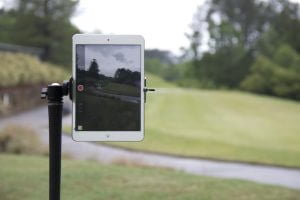 Whether it’s for personal use or as part of a large-scale production, getting the right shot is crucial to any video. But if you’re in a situation where set up time is at a minimum, you don’t want to be strapped down with loads of gear that will require a lot of time and energy in the teardown/set up process. What if getting the perfect shot for the next scene was as simple as putting a small pole into the ground, mounting and adjusting your camera, and pressing record? That’s exactly what the SportPod is designed to do.
 Sometimes the best practice for capturing a live event is to have multiple cameras. But setting up these kinds of shoots can require lots of extra (not to mention costly) equipment. It can also be technically challenging to set up a multi-cam rig, as different manufacturers and models may have their own requirements for audio-video connections that may or not match each other. Could it be possible to deliver a robust multi-angle video presentation that uses only one camera?
 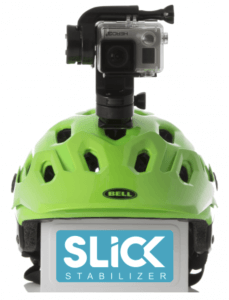 Nobody likes watching video that’s bouncing and jerking around the frame. Some cameras come with built-in stabilizers to try and solve the problem. But those kinds of stabilizers can only do so much. There are high-end solutions like the Steadicam harness. But they’re very expensive and require special training to operate. Wouldn’t it be great if there were a middle ground between these two solutions? That’s where the new Slick Stabilizer comes in.
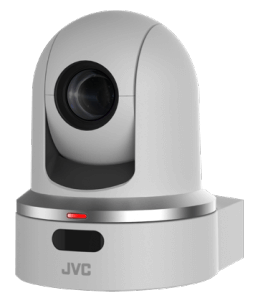 Video-production systems are becoming equally as compact as they are sophisticated. That’s great news for producers, as it gives them new opportunities to extend their abilities. JVC is helping to further the process with a new camera it’ll be showing off during this year’s NAB Show in Las Vegas. The camera is compact, powerful, and can be controlled remotely.
 Traveling with photo gear can be a real challenge. You need something that’s as rugged as it is portable. This can be a difficult balance to achieve. Fortunately, the designers of a new backpack called Progo (not to be confused of course with GoPro) have stepped in to try and solve this problem.
 Photography startup company Light recently
  Fujinon is a well respected manufacturer of camera lenses. Fujinon was recently tied more heavily to its parent company, Fuji Film. It’s a small change in name only. The Fuji folks are still hard at work creating new top of the line products.
 This post kicks off a series of video presentations recorded at this year’s National Association of Broadcasters (NAB) trade show in Las Vegas. These videos showcase new products that may be of interest to professional media producers.