
 Fujifilm has released its new X-A3 camera. It is a upgrade from last year’s X-A2 camera. Both versions are mirrorless cameras that have a fun retro style.
Fujifilm’s new X-A3 camera has a 180-degree tiltable LCD that is great for taking seflies. It lets you check your composition before you take the picture. Eye Detection AF and Portrait Enhancer mode automatically adjust for proper focus and skin tones.
The new 23MP APS-C sensor makes sure every image is high-quality. The X-A3 camera has built in Wi-Fi that lets you share to the Instax SHARE printer (which is also made by Fujifim). It also enables users to transfer the photos off of the camera and onto their smartphone or tablet. The touchscreen LCD monitor offers intuitive controls. Super Intelligent Flask and Macro mode are ideal for nightshooting or close-up photos.
The retro design makes the camera look fashionable. The top cover, front plate, and top dials of the camera are made of aluminum. Newly-developed faux leather gives the X-A3 a nice texture. The X-A3 comes in brown, silver, or pink.
Some specifications include:
* Number of effective pixels – 24.2 million pixels
* Image sensor – 23.6mm x 15.7 mm (APS-C) CMOS with primary filter
* Sensor cleaning system – Ultra Sonic Vibration
* Storage media – SD Card (2G) / SDHC Card (32G) / SDXC Card (256G) UHS-1
* File format for still images – JPEG (Exif Ver 2.3) / RAW (RAF format) / RAW+JPEG (Design rule for Camera File system compliant/DPOF-compatible)
* File format for videos – Movie File Format MOV, Movie Video Compression: H.264, Audio: Linear PCM Stereo
* Lens mount – FUJIFILM X mount
* It has face detection and eye detection.
* Shutter type – Focal Plane Shutter
* LCD monitor – 3.0-inch, aspect ratio 3:2, approx. 1,040K-dot Tilt-type, TFT color LCD monitor (approx. 100% coverage)
 For years, Firewire was the reigning technology when it came to sending multichannel audio to/from an interface and a computer or other host device. While it’s still technically possible to use Firewire in many instances, the protocol is clearly giving way to other connection types like Thunderbolt and USB 2.0 (and probably down the line, USB 3.0). With that in mind, I was recently in search of a new USB 2.0 mixer. I wanted the ability to send multichannel audio to my computer for recording, and my current mixer, equipped with a USB 1.1 connection, could only send two audio channels. I began searching around for new gear options and was frustrated by just how difficult it was to find mixers and interfaces that met this requirement. After hours of searching and some suggestions I received on a couple of different podcasting-related forums, here’s the list of all USB 2.0 mixers and interfaces I could find that sell for less than $1000US.
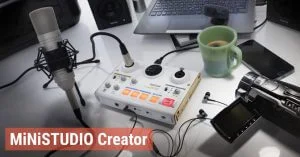 Podcasting has been around for over a decade. During that time, podcasters have had to rely on a plethora of tools that were really designed for other uses. Sure, you can create a podcast with gear that was created for music or live sound production. But it can lead to complex workarounds or other hassles that keep you from the important thing: Creating your podcast. With that in mind, Tascam has released
  Microsoft has endured a lot of criticism lately over its aggressive policy of pushing software updates onto customers. This was probably demonstrated most noticeably over the company’s unwillingness to let users of Windows 7 and Windows 8 stay with their current operating systems, and constantly badgering (and in some cases, forcing) them to upgrade to Windows 10. Now it looks like the Redmond, WA-based tech monolith is about to receive a new round of hate, as its recently released Windows 10 Anniversary Update is
  iZotope, the developer of popular high-end audio plugins like RX and Nectar, is running a special on some of its standalone products. The sale was launched as a way for iZotope to celebrate its Facebook page receiving 100,000 likes. The company is offering up to an 80% discount on some items. All of the plugins are priced at $100 each. Here’s a list of what’s available thru this special offer:


 Time waits for no one. Nor does the inevitable progress of higher-resolution video. It still feels like true HD video has just barely been normalized here in the United States. And yet the push beyond HD, into 4K and even 8K, has begun. The latest example of the move forward comes from Japanese public broadcasting agency NHK (also known as Japan Broadcasting Corp.) as the company has begun